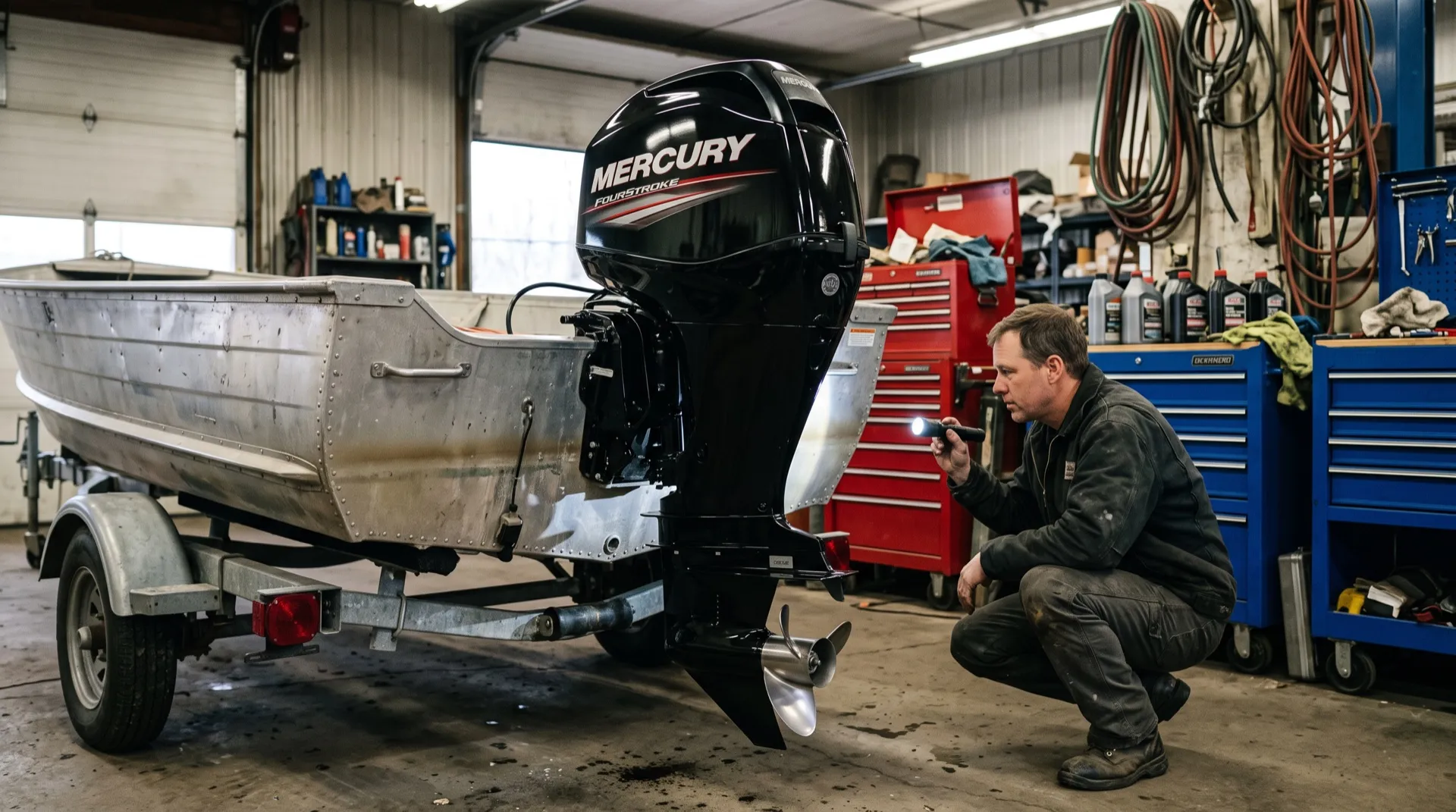
--- Three checks before choosing a repower 1. Inspect the hull. Have structural concerns assessed in person before choosing a replacement motor. 2. Confirm the boat still fits. Consider how you use it, its capacity limits and the equipment it needs. 3. Compare written totals.
Quick answer: Repower when the hull is structurally sound, the boat still suits how you use it, and the motor is the main problem. Replace or repair the hull first when the transom, floor, stringers, or impact areas show structural concerns. A photo can help with triage, but the final recommendation requires an in-person boat-specific assessment.
Three checks before choosing a repower
- Inspect the hull. Have structural concerns assessed in person before choosing a replacement motor.
- Confirm the boat still fits. Consider how you use it, its capacity limits and the equipment it needs.
- Compare written totals. Put hull repairs, repower work and boat replacement on the same basis. Age alone does not decide the outcome.
Quick Answer
If the hull is sound and the motor is tired, repower. If the hull is rotting, structurally compromised, or fundamentally undersized for how you use it, replace the boat. Repowering a bad hull is throwing money at a doomed platform. Honest assessment and installed repower quotes at mercuryrepower.ca.
Honest hull check
Repower the hull, or replace it?
The motor is rarely the most expensive thing on a boat. The hull underneath it is.
Repower the existing hull if
- ✓Stringers, transom, and floor are solid (no soft spots, no rot)
- ✓Hydraulic steering and rigging are in working order
- ✓Hull layout, seating, and gunwale height still suit how you boat
- ✓The motor is the only major problem
- ✓You are attached to the boat or it has sentimental value
Repower this boat
Inspect and price structure first if
- ✓Transom is soft, cracked, or has obvious water damage
- ✓Stringers are rotting or the floor is spongy
- ✓You would need to rebuild more than the motor (electronics, controls, seats)
- ✓The hull is 30 plus years old with no maintenance records
- ✓Your family use has grown beyond what the boat can carry
Have a qualified shop inspect and price any structural repair before you sell, scrap, or quote a new motor
When in doubt:Get an in-person hull inspection before quoting a major repower. Localized floor or transom damage can be repairable; a qualified assessment decides that. We will not quote a serious motor into a hull that will not outlast the new motor.
Start with the structure, not the shopping decision
The useful first question is not "new boat or old boat?" It is "is this hull structurally suitable for another engine cycle?" Price comparisons come later. A soft transom, damaged stringers, cracked mounting area, or a hull that no longer suits the family can end the repower discussion before the motor quote matters.
Three Patterns We See Repeatedly
Customers who want a new boat for new-boat reasons, specific hull, latest features, the experience of buying new, should buy one. We sell Legend Boats at HBW. The repower argument isn't for everyone.
Customers whose hull still fits and whose motor is the main problem may be good repower candidates. The assessment still has to cover the transom, floor, hull, steering, fuel system, electrical system, and rigging.
Customers with a soft or compromised hull should not repower. A new motor on a bad hull is spending premium for an asset that will fail anyway.
The hard part is honestly assessing the actual hull. Age, hull material, storage history, and a few photos can guide the first conversation, but none of them replaces an in-person inspection before a final quote.
Keep the structural and financial decisions separate
First decide whether the hull is a safe, suitable repower candidate. Then compare two current written scopes: the complete installed repower and the complete replacement package. Include HST, trailer work, steering, controls, gauges, propeller, batteries, electronics, structural repairs, financing cost, and any work the existing boat needs regardless of which path you choose.
Use the live Mercury pricing reference and a configured quote for the motor side. Use a current written quote for the replacement boat. Old planning ranges and generic "percentage saved" claims are not reliable enough for this decision.
When to Repower, The Clear Yes
- The hull, transom, floor, and mounting area are structurally sound. Age alone does not approve or disqualify a boat.
- Existing seats, helm, and electronics still work or are fixable. A motor swap doesn't require replacing the whole boat.
- The hull fits your use case. A 16 ft aluminum console for fishing on Rice Lake, Ontario is the right tool. A new 16 ft aluminum console won't feel different on the water.
- You like the boat. Sentimental and lifestyle attachment matters. The boats people keep for 20 years are usually boats they love.
- You plan to keep and use the boat long enough to justify the work. Put your own time horizon into the written comparison.
When to Replace, The Clear No on Repower
- Hull is rotting, soft, or has structural problems. Soft transom, soft floor, hairline cracks at stress points, or repair patches that didn't hold are end-of-life signs. A new motor on a bad hull is good money after bad.
- Hull is fundamentally undersized for current use. A 14 ft aluminum that's now expected to haul a family of five at 25 mph can't do that job. No motor fixes the mismatch.
- You hate the boat. If you don't want to spend more time on the hull, a new motor won't fix that.
- Several major systems need work at the same time. Compare the complete repair-and-repower scope with a complete replacement quote instead of using a fixed percentage rule.
- You plan to sell soon. Get a current as-is value and a documented post-repower value estimate before assuming the repower will pay back.
When customers fall into this category, we tell them. We sell new Legend Boats. We're not married to the repower path.
The Middle Ground
Some hulls fall between clear yes and clear no:
- Older fiberglass with cosmetic issues but solid structure. Repower works; plan a cosmetic refresh during the same shop visit.
- Aluminum hulls with a repairable floor or transom concern. Price and complete the structural repair before treating the hull as ready for a new motor.
- Hulls with outdated electronics and rigging. Quote those items explicitly so the comparison includes the boat you will actually pick up.
The right answer depends on the specific hull, the complete work scope, and what the owner needs the boat to do.
What HBW Checks Before Recommending One Path
When customers ask "repower or replace?", we want to know:
- Boat make, model, year, length, and hull material
- Storage history (indoor heated, indoor unheated, outdoor)
- Visible structural condition
- Existing motor age and condition
- How often you use the boat and for what
- Long-term plan (5 years, 10 years, 20 years)
- Budget tolerance and financing options
The assessment can end with repower, repair first, replace the boat, or keep using the current motor and monitor a documented concern. The evidence from the boat controls the recommendation.
Common Decision Mistakes
Replacing a hull that was fine. Customer assumes their 12-year-old aluminum is at end of life because the motor died. Hull is solid. The replacement was unnecessary spending.
Repowering a compromised hull. A new motor does not repair a soft transom, damaged stringer, cracked mounting area, or water intrusion.
Replacing for cosmetic reasons. Faded gel-coat or worn vinyl seats aren't structural problems. Cosmetic refresh is much cheaper than replacement.
Ignoring the trailer. A 20-year-old trailer with seized bearings is a separate decision from the boat. Sometimes the trailer is the limiting asset.
Compare the next step
If the hull appears suitable, build the motor configuration at mercuryrepower.ca and bring the boat to the agreed assessment. If the structure or use case is still uncertain, resolve that first. The repower-versus-new total-cost guide covers the financial comparison after the hull clears this checklist.