Last reviewed: 2026-07-09 > Quick answer: 2026 is a functional year to buy a boat in Canada, not a deal year. Inventory has recovered, lead times are normal, and prices sit above 2019 levels with little sign of dropping. If your hull is sound, a Mercury repower is often...
Last reviewed: 2026-07-09
Quick answer: 2026 is a functional year to buy a boat in Canada, not a deal year. Inventory has recovered, lead times are normal, and prices sit above 2019 levels with little sign of dropping. If your hull is sound, a Mercury repower is often better value than buying new. Build a repower quote at mercuryrepower.ca.
Quick Answer
2026 is a functional year to buy a boat in Canada, not a deal year, but not a bad year either. Inventory has recovered from the pandemic shortage. Lead times are normal. Prices are higher than 2019 and are not likely to drop meaningfully. If you have a sound hull, a Mercury repower may be the better value than buying new. Build a configured repower quote at mercuryrepower.ca.
Full Article
Every January through April, we hear the same question: should I buy now, or wait? This year it comes with more weight than usual. Tariffs, an uncertain dollar, interest rates that moved fast in both directions, 2026 is a more variable market than anything most Ontario boaters have dealt with in the last decade.
Here is an honest read on the market from a third-generation family marina that has been selling and servicing Mercury motors on Rice Lake since 1947. We are not going to tell you it is a great time to buy if we do not believe that.
What the 2026 Boat Market Actually Looks Like
Inventory: Significantly better than 2021, 2023. During the pandemic boom, buyers waited 18 months or more for popular models. That situation is largely resolved. Dealers have boats. Lead times are back to something normal. You can comparison shop again.
New boat prices: Up compared to 2019. Not dropping significantly in 2026. Supply chain disruptions, currency movement, and material cost increases created a new pricing floor over the past four years. If you are expecting 2019 prices, they are not coming back.
Used boat market: More inventory than 2022, 2023, but prices remain elevated relative to pre-pandemic levels. Used boats are not being discounted aggressively. Buyers who purchased at the 2021, 2022 peak are still holding asset value.
Short version: You will not get a pandemic deal. You also will not face pandemic-era wait times or limited selection. It is a functional market.
The Tariff and Exchange Rate Reality
This is the factor most buyers underestimate. Most major outboard manufacturers, Mercury, Yamaha, Suzuki, assemble or source components in the United States. Most aluminum fishing boat brands have North American manufacturing with significant U.S. content. Even boats assembled in Canada use U.S.-sourced components.
When the Canadian dollar weakens against the U.S. dollar, boat prices in Canada rise, not immediately, but within one to two model cycles. The 2024-2025 dollar movements have already been reflected in 2026 pricing for most dealers.
Trade tariff changes between Canada and the U.S. add another variable. The details of what applies to marine goods in 2026 are evolving. The practical takeaway: if tariff exposure increases further, 2026 prices are a floor, not a peak. Waiting for prices to drop on the assumption of tariff resolution assumes a political outcome that is not certain.
Financing in 2026
Interest rates in Canada have moderated from the 2023 peak. The Bank of Canada has made multiple cuts. Marine lending has followed partially, boat financing typically tracks prime with a premium.
Rates in 2026 are better than 2023. They are not as low as the 2020, 2021 environment. Monthly payments on a typical boat purchase are lower than they were at peak, but the boat itself costs more than it did in 2020.
What to factor into total cost: financing, insurance, storage, maintenance, and fuel, not just the purchase price.
Who Should Buy in 2026, and Who Should Wait
Buy now if:
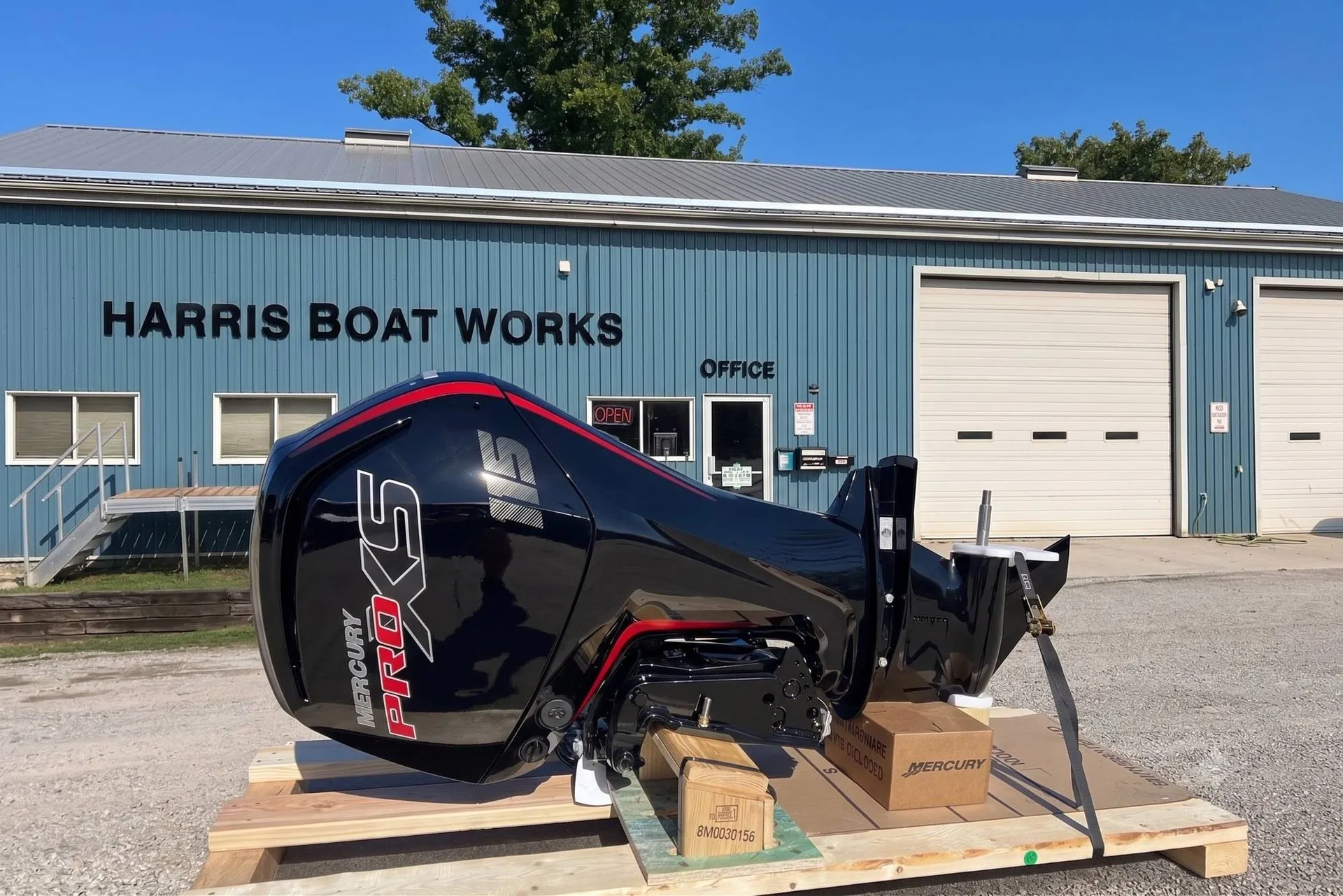
You are replacing a motor, not buying a whole new boat. A Mercury repower on a sound hull is often meaningfully better value than a new boat purchase at 2026 prices. You get upgraded technology, improved fuel economy, warranty coverage, and you are not paying for a new hull you do not need. HBW currently has Mercury motors in stock. Build a transparent, no-games quote at mercuryrepower.ca.
You have been in the market for 12 to 18 months and the boat you want is available. Waiting for a correction that may not come costs you a season.
Your current boat is costing more in repairs than it is worth. If you are spending heavily on repairs to a boat worth $8,000, the math is a warning.
You are a first-time buyer with a clear, modest budget. The entry-level aluminum fishing boat and small pontoon market is reasonable in 2026. Real inventory, real prices. Check harrisboatworks.ca for what is on the lot.
Consider waiting if:
You are buying out of fear, not need. "Prices might go up" is not a purchasing strategy on its own. If you are not ready, do not know exactly what you want, and have not done the research, buying in a hurry causes regret.
You can build a live CAD quote for your repower online at Mercury Repower Centre.
You want a premium or specialty boat. The higher the price point, the more price discovery questions exist in 2026. A $35,000 aluminum boat is a different market than a $150,000+ cabin cruiser.
The repower math is better for you. For many Ontario boaters with a sound hull and a worn motor, the repower is the better move. Build a quote at mercuryrepower.ca before going to a showroom.
2026 timing decision
Buy this season, or wait for fall pricing?
The 2026 market is not collapsing and not booming. Your timing depends on whether you can wait.
You need a boat for this season
- ✓You sold or lost your previous boat and want water time in 2026
- ✓You have a family vacation or cottage booked that needs the boat
- ✓Current inventory has something close to what you want
- ✓You can pay or finance now without stretching
Buy now, the market is what it is. Lose a season chasing a discount.
You can wait until late fall
- ✓You have a working boat that will get through 2026
- ✓You want a specific model or HP not currently in stock
- ✓You want to negotiate from a position of patience
- ✓October to December dealer flexibility matters to you
Wait. Off-season pricing and trade-in flexibility are real.
When in doubt:A season on the water is worth more than 5 percent off a motor. If a missed summer hurts more than the discount helps, buy now.
The Repower Option: Better Value in 2026 Than It's Been in Years
This deserves its own section. The economics of repowering a sound used hull instead of buying new have shifted meaningfully in 2026.
New boat prices are elevated. Mercury's current FourStroke lineup is genuinely excellent. The repower cost is predictable. A new boat carries financing costs, depreciation on a new hull, and a motor you may not need.
For a hull that is structurally sound, under 25 years old, with an aging or unreliable motor, a repower is worth pricing out before setting foot in a showroom. Build a specific, configured quote at mercuryrepower.ca. No phone calls, no games, no "we'll give you a price when you come in."
For engine repairs, we only service Mercury and Mercruiser.
HBW's Honest Advice
We sell boats and motors. We are transparent about that.
We have also been doing this for three generations. A customer who makes a decision they are comfortable with comes back. One who felt pressured does not.
Our 2026 advice: do the full math before deciding. If you are replacing a motor on a good hull, price out the repower at mercuryrepower.ca first. If you are in the market for a new boat, bring a clear budget that includes all carrying costs, not just the purchase price. If you are not sure whether ownership is right for you, rent for a season first, HBW has nine boats available on Rice Lake.
What we see at HBW
First weekend in May, the shop fills up with no-starts. Nine out of ten are the same three things. The battery is dead because the charger was not plugged in over winter. Fuel went stale because no stabilizer was added before storage. Or the kill-switch lanyard got bumped during winterization and the helm does not realize it.
The fourth most common: corroded battery terminals from a boat that sat outside in salt-spray weather. Cleaning the terminals plus a fresh battery solves more spring no-starts than any other repair.
FAQs
Is 2026 a good year to buy a boat in Canada?
It is a functional but not exceptional year. Inventory is normalized. Prices are higher than 2019 and are unlikely to drop meaningfully. For ready buyers with clear goals and financing in place, 2026 offers reasonable selection. For those hoping for a price correction, limited evidence one is coming.
Are boat prices going down in Canada in 2026?
Prices are largely holding or seeing minor softening at the new-end compared to the 2021, 2022 peak. They have not returned to pre-pandemic levels.
Is it better to buy a new boat or repower in 2026?
For many Ontario boaters with a sound hull, repowering is better value. A Mercury repower delivers upgraded technology, warranty coverage, and improved fuel economy at a fraction of a new-boat cost. Use mercuryrepower.ca to compare.
What is the best time of year to buy a boat in Canada?
Fall (September, November) for new boats, dealers are clearing model-year inventory. Winter boat shows (January, February) for promotional financing programs. Spring offers the widest selection but also peak demand and less dealer motivation to negotiate.
Should I buy or rent in 2026?
At 10 to 15 days of use per year, the math generally favors renting. At 30+ days of use per year, ownership starts to make sense. A season of renting before purchasing typically leads to a better buying decision.
Internal Links
CTA
See real prices. No games.
Build your Mercury repower quote at mercuryrepower.ca, live CAD pricing, full configuration, no phone calls required.
Or call 905-342-2153. Harris Boat Works, Gores Landing, ON. Est. 1947.
Ready to price it out? Build a live CAD quote for your repower online at the Mercury Repower Centre.