--- ## Quick Answer A Mercury that ran fine in October and won't start in May didn't randomly break. Something changed over the off-season. In Ontario, the most common causes are: battery discharge and sulfation from cold winter storage, stale or contaminated fuel, corroded...
Quick Answer
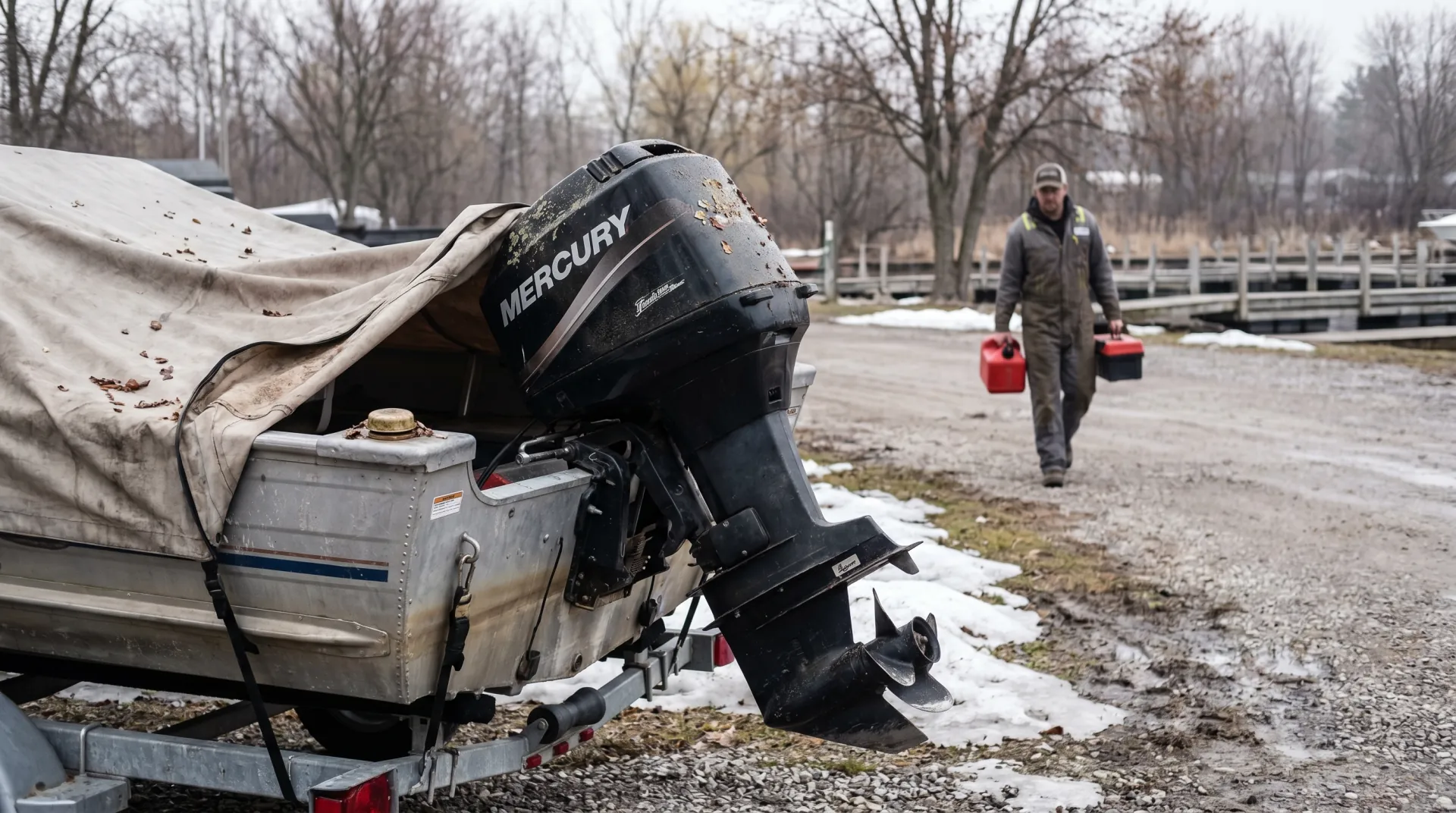
A Mercury that ran fine in October and won't start in May didn't randomly break. Something changed over the off-season. In Ontario, the most common causes are: battery discharge and sulfation from cold winter storage, stale or contaminated fuel, corroded electrical connections, and fuel system issues from sitting. Start with the battery, then fuel, those two causes account for the majority of spring no-starts. The safety lanyard check comes first because it's fastest.
For engine repairs, we only service Mercury and MerCruiser. Book at hbw.wiki/service.
Post-storage diagnostic
Won't start after sitting? Work through these five
Long storage is the #1 cause of spring and post-vacation no-starts. Run these in order.
How long has it sat?
?Has the boat been stored more than 4 weeks without running?
💡4 weeks is the rough threshold where fuel starts to break down and batteries lose enough charge to affect starting. Anything over 3 months, treat it as a full spring commission.
Battery first
?Does the battery read 12.4V or higher at rest, with clean terminals?
💡If the boat was on a charger, you are fine. If it sat in storage without a maintainer, the battery is the #1 suspect. Charge fully before further testing.
Fuel age
?Is the fuel less than 6 months old, and does the primer bulb firm up?
💡Old E10 phase-separates. If the boat is sitting on last season's fuel, drain and refill before troubleshooting further. A soft primer bulb usually means an air leak or empty line.
Carb or EFI clog
?Did the engine run well before storage?
💡If yes, and fuel + battery check out, suspect varnish buildup in the carb or injector. Carbureted motors are more sensitive to old fuel than EFI. EFI Mercurys usually start once fresh fuel reaches the injectors.
Engine cutoff and spark
?Is the lanyard attached, and does the engine crank without firing?
💡Cranking but no fire usually points to spark or fuel delivery. Pull a plug to check spark, confirm fuel reaches the rail. If both are present and it still will not fire, that is our cue to step in.
🔧Tried everything?
After storage, the most common no-start fixes we see are carb cleaning, fuel system flush, and battery replacement, all priced at our current published rates. Book at hbw.wiki/service.
Mercury Outboard Won't Start After Sitting: Ontario Boater's Spring Checklist
A motor that sat for five or six months through an Ontario winter and won't start in spring isn't being difficult. It's showing you exactly what sitting did to it. The good news: most of the causes are predictable, diagnosable by an owner, and fixable without a service call, if you work through them in order.
Boats are remarkably good at turning six months of storage into an educational Saturday. This is the checklist that shortens that Saturday considerably.
Before You Start: Safety Checks
Before cranking the motor at all:
- Kill switch lanyard is attached to the switch on the dash or tiller handle
- Motor is in neutral, most Mercurys won't crank out of gear
- Battery switch is ON, easy to forget if it was turned off for storage
- No fuel leaks, before starting, smell around the motor and fuel connections
The lanyard is the single most common cause of "won't crank" calls. It takes five seconds to check and it's found to be the problem often enough to always check it first.
Step 1: The Battery, Cold Storage Takes a Toll
This is where most Ontario spring no-starts start and end.
An Ontario winter is genuinely hard on lead-acid marine batteries. The combination of cold temperatures, self-discharge over 5-6 months, and lack of maintenance charging means a battery that was at 100% in October may be at 50% or less in May, and a deeply discharged battery sulfates, which permanently reduces its capacity. It may show voltage on a basic multimeter but collapse under cranking load.
What to check:
- Resting voltage: 12.6V = fully charged. 12.4V = acceptable, charge before using. Below 12.2V = seriously compromised.
- Cranking test: With a load tester (or by watching voltage during crank): should hold above 9.5-10V while the starter runs. Drop below this and the battery can't do the job.
- Terminal condition: White or green deposits on terminals = corrosion = resistance. Clean with a wire brush and baking soda solution, dry, reconnect, then retest.
- Cable connections: All tight? A cable that loosened over the winter creates intermittent no-start symptoms.
If you put the battery on a tender over winter: You're in much better shape. A properly maintained battery typically comes out of storage near full charge.
If you didn't: Charge it fully first. If it won't take a charge or drops quickly under load, replace it. A new battery is a much less expensive fix than the frustration of diagnosing everything else while the battery is marginal.
Step 2: Fuel, Old Gas Is Genuinely a Problem
E10 fuel (standard Ontario pump gas with 10% ethanol) starts degrading in 30-60 days. Fuel that's been sitting in the tank from last October without stabilizer, or with incorrectly applied stabilizer, may be the issue.
Stale ethanol-blend fuel can:
- Develop sour-smelling, lacquer-like oxidation byproducts that gum up injectors and carburettors
- Phase-separate as the ethanol absorbs water, leaving a water-alcohol layer at the tank bottom
- Cause hard start, rough idle, and poor performance even if the motor eventually runs
What to check:
- Smell the fuel. Fresh gas smells like fuel. Stale gas smells sour or like nail polish remover. If it smells off, it is.
- Check the fuel tank for water. Water is heavier than fuel and sinks. If there's a drain or sump on the tank, check it.
- Drain the fuel filter/water separator. Mercury FourStrokes have one inline. Drain the bowl and look for water droplets or discolouration.
- Check the primer bulb. Should pump firm in 6-8 squeezes and hold pressure. Stays soft = air leak in the fuel line connections or a deteriorated bulb.
- Check fuel lines. Old rubber fuel lines harden and crack. A cracked line lets air in, causing lean running or no-start. Inspect visually and by feel.
- Tank vent open? An unvented tank creates vacuum as fuel draws out. The motor starves.
If the fuel is suspect: The cleanest fix is to drain the tank and refill with fresh fuel. On smaller tanks, this is easy. On larger tanks, a quality fuel stabilizer added to the old fuel and running the motor through a flush cycle can help, but fresh fuel is better.
We sell ethanol-free fuel on-site at HBW. For a motor going into storage, finishing the season with ethanol-free is one of the best things you can do for next year's start.
Step 3: Spark Plugs and Ignition
If battery and fuel are confirmed good, spark is next.
After sitting, spark plugs can be fouled (oil or carbon deposits from the last season), gapped incorrectly, or just at end of service life. A plug that looks physically fine can still have an internal failure.
- Remove the plugs and inspect for fouling (oily black = oil/rich fouling; white/chalky = lean/overheating; normal = light tan to grey)
- Confirm the electrode gap matches your motor's spec (in the owner's manual)
- Replace any that look doubtful
Flooding: If you cranked the motor multiple times trying to start it before reading this, the cylinders may be flooded with fuel. Remove the plugs, crank briefly to clear the cylinders, let it sit 15-20 minutes with plugs out, then reinstall fresh plugs and try again.
Step 4: Check for Display Messages or Fault Codes
If your boat has a SmartCraft display, VesselView, or any Mercury gauge display, check it before and after attempting to start. Mercury's ECM logs fault codes and displays active alarms.
Take a photo of any message displayed. Include this when booking service, it saves diagnostic time.
The Winterization Connection
If the motor wasn't properly winterized last fall, some of the causes above are more likely and some additional ones are possible:
- Unstabilized fuel in the system gummed up injectors or carburettor passages
- The wrong internal-protection procedure can leave corrosion or fuel-system storage problems
- Cooling system water not fully drained, if it froze, there may be physical damage
- Battery not tendered or removed, compromised battery from winter discharge
If you're not sure the motor was properly winterized, tell the dealer. It's relevant to the diagnostic.
When to Stop and Book Service
DIY troubleshooting makes sense when you can identify and fix the problem. It stops making sense when:
- You've worked through all the above and still can't identify the cause
- The motor cranks but won't run, or runs briefly and dies
- There are active fault codes you can't interpret
- You suspect a fuel system issue beyond stale gas (carburettor or injector blockage that needs cleaning)
- The motor makes unusual noises during cranking
For engine repairs, we only service Mercury and MerCruiser.
Book at hbw.wiki/service. Our shop handles a consistent volume of spring diagnostic work every May, the sooner you book, the sooner you're on the water.
Can't find the problem?
Book a spring diagnostic at hbw.wiki/service. Harris Boat Works, Gores Landing, Mercury Premier dealer. Mercury dealer since 1965, family marina on Rice Lake since 1947. For engine repairs, we only service Mercury and MerCruiser.
Phone: 905-342-2153