This bass boat stayed at 115 horsepower. The motor changed. In our May 2026 shop post, we described the repair cost as greater than the motor’s value. The owner kept the boat, and we replaced the motor with a new Mercury 115 Pro XS. It was a same-horsepower repower.
Quick answer: HBW replaced this Rice Lake bass boat’s older Mercury 115 OptiMax with a 2026 Mercury 115 L Pro XS, keeping the same 115 HP rating. The completed work confirms the engine change and water-pressure gauge connection. Listed propeller parts are recorded separately from final fitment and water-test results, which are not established by the available completion note.
This bass boat stayed at 115 horsepower. The motor changed.
In our May 2026 shop post, we described the repair cost as greater than the motor’s value. The owner kept the boat, and we replaced the motor with a new Mercury 115 Pro XS.
It was a same-horsepower repower. The useful details to separate are the confirmed water-pressure gauge connection and the propeller parts recorded for the job.
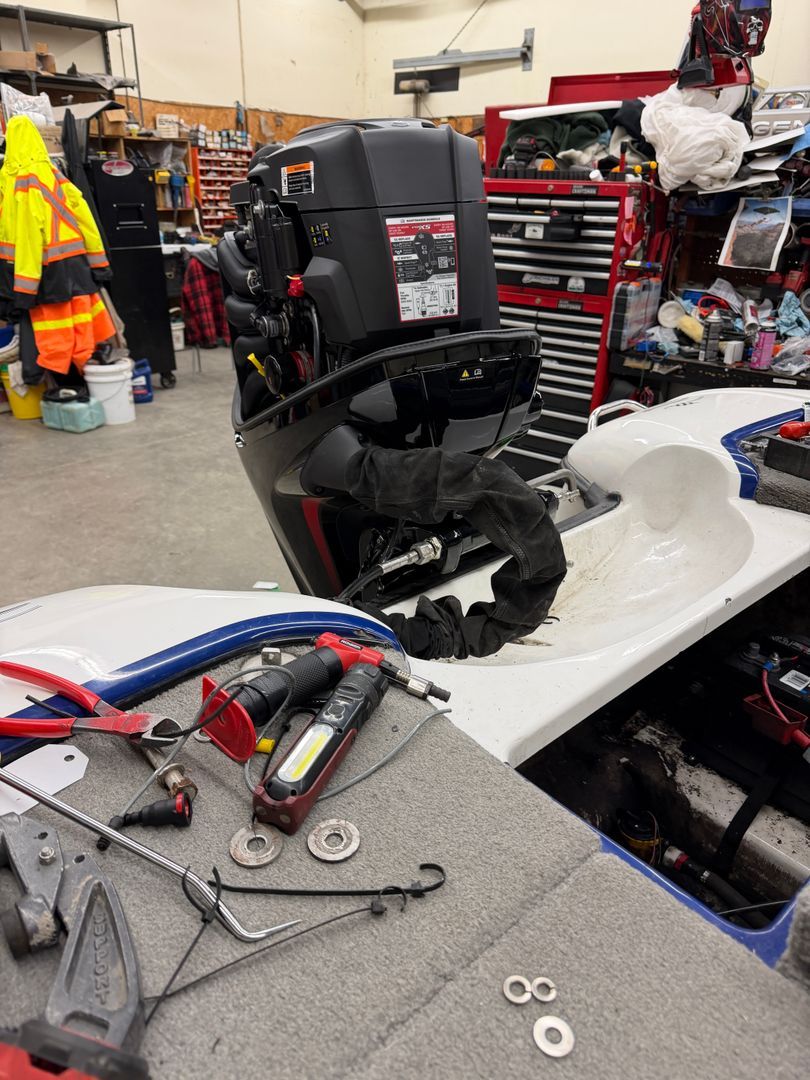
The new 115 Pro XS in our shop with the cowl off during rigging. We shared this job on our Facebook page in May 2026.
When the repair stops making sense
An older outboard doesn’t need replacing just because it’s old. The question is what it’ll cost to put right, and whether putting that money into the old motor still makes sense.
A repair can cost more than an old motor would sell for and still be the better choice. Compare the repair scope and the condition you expect afterward with the complete installed cost of replacement. Also consider whether the hull and transom are worth keeping, and how long you intend to keep the boat.
Ask what the repair addresses and what would still need attention afterward. Then compare that with a complete repower scope. A motor-only price leaves out the controls, connections and other equipment your particular installation may need.
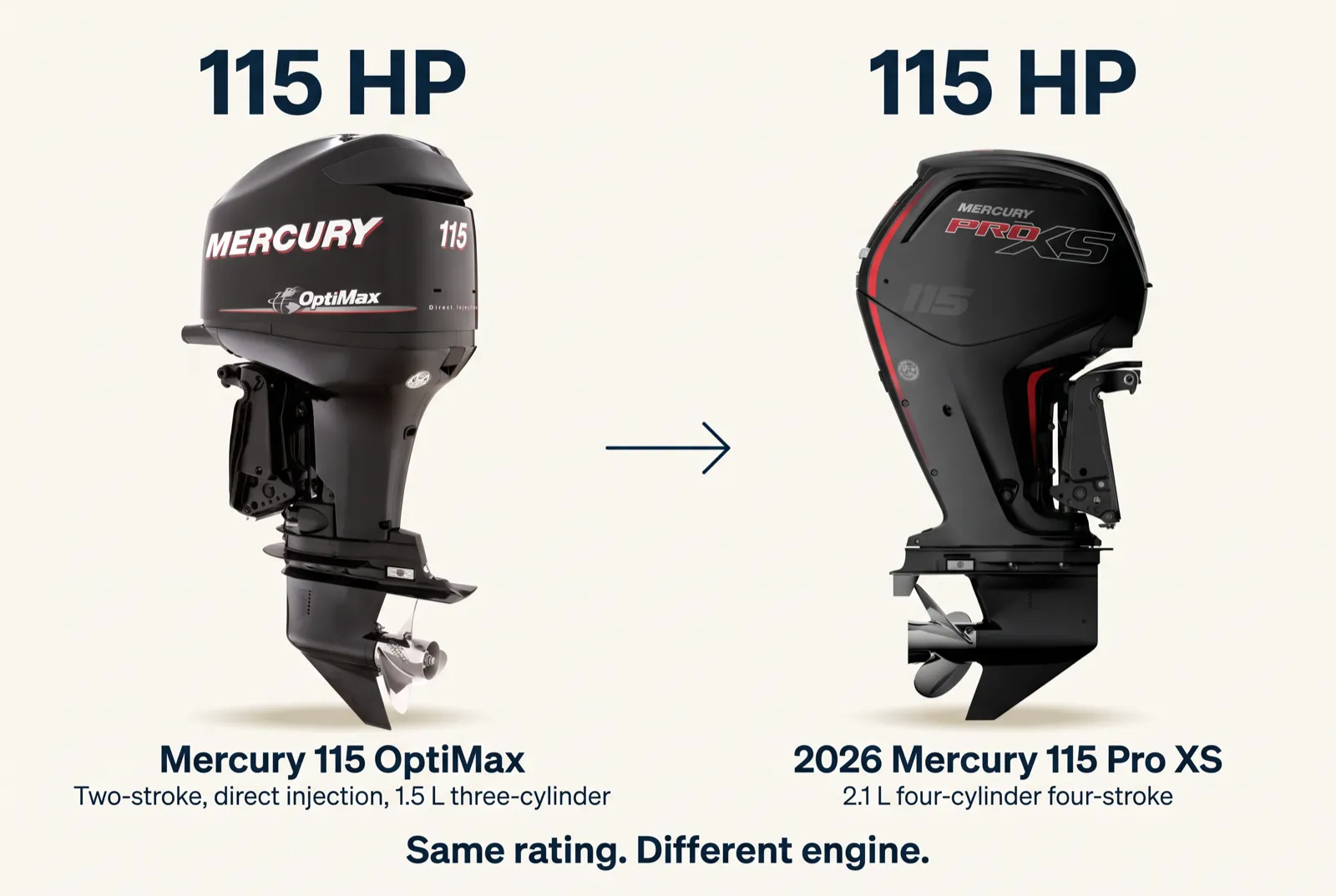
Product-reference illustration, not photographs of the removed and installed motors. The outgoing OptiMax's exact year is unconfirmed; the left motor represents the family.
The replacement and the recorded setup
The motor installed was a 2026 Mercury 115 L Pro XS. Mercury describes the 115 Pro XS as a 2.1-litre, inline-four engine. Its 115 HP rating matches the outgoing OptiMax’s rating, but that alone doesn’t settle the rigging or propeller choice.
Our completion note confirms removing the old engine, installing the new one and connecting the water-pressure gauge.
The job’s parts list records the following components:
| Component |
Listed for this job |
| Propeller |
Express three-blade stainless steel, 13¼-inch diameter × 19-inch pitch, right-hand rotation. Job reference: 708-31431912; manufacturer reference: 31431912. |
| Hub kit |
Job reference: 708-11500100 |
| Water-pressure hose kit |
Job reference: 32-8M0088855 |
The propeller and hub appear on the parts list, but the available completion note doesn’t confirm the final propeller fitment or record water-test results. The parts list alone doesn’t establish the final tested setup. It also isn’t a universal parts list for every 115 Pro XS repower.
Why the propeller deserves its own conversation
The first number in 13¼ × 19 is diameter. The second is pitch: the theoretical distance the propeller would advance in one revolution, before slip. A 19-inch pitch doesn’t tell you how fast the boat will go.
Blade design, material, gearcase compatibility and the hub matter too. The practical check is whether the propeller lets the engine operate within its specified RPM range with the boat’s normal load.
For an owner planning a similar repower, the point is simple: have the existing propeller evaluated as part of the new package. Keeping the same horsepower doesn’t automatically settle whether the old prop is the right choice.
Our Mercury propeller selection guide explains that process in more detail.
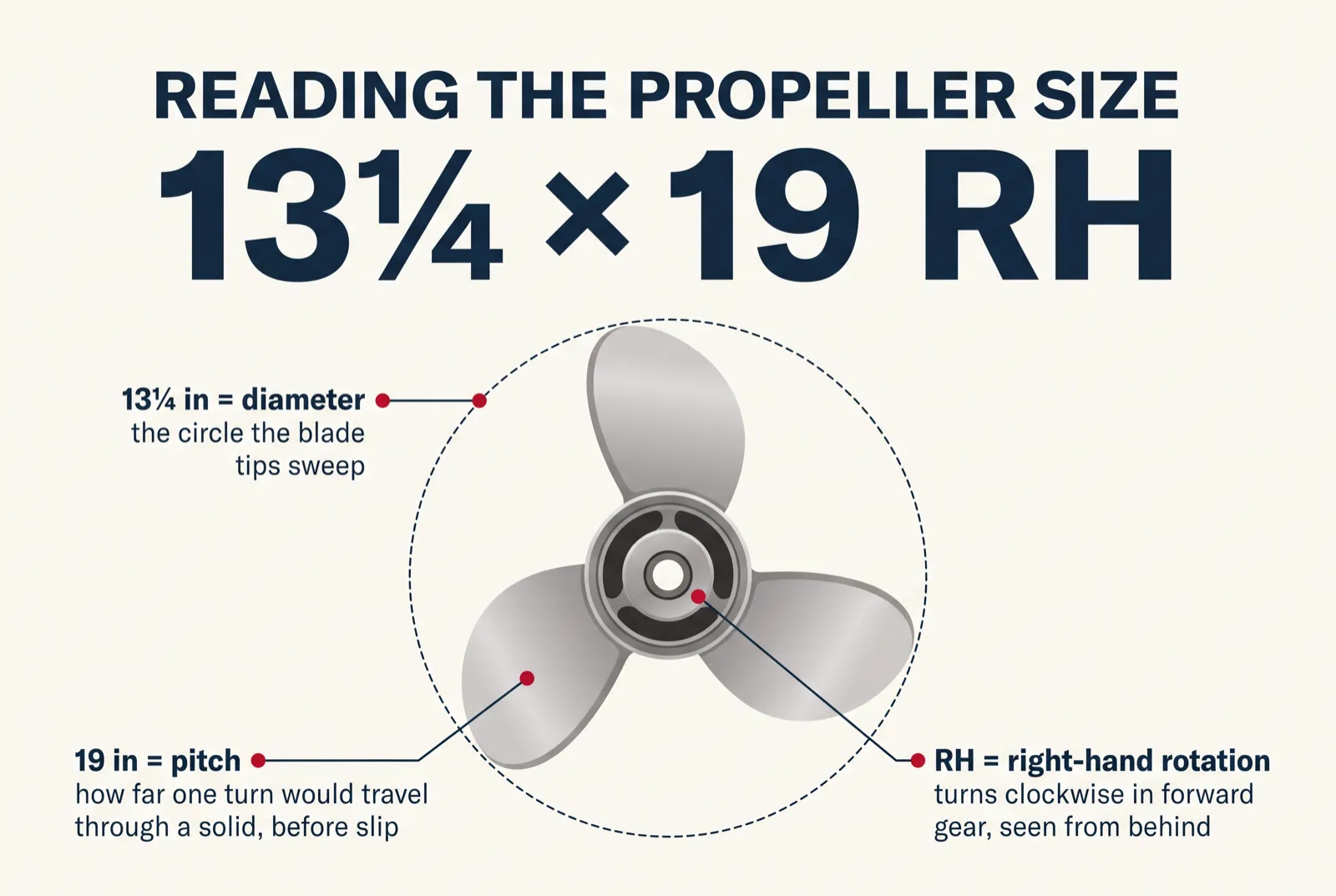
Illustration of how to read the listed size, not a photograph of this job's propeller.
- 13¼ inches is diameter: the circle swept by the blade tips.
- 19 inches is pitch: theoretical travel in one revolution before slip.
- RH means right-hand rotation: clockwise in forward gear when viewed from behind.
Keeping the water-pressure gauge connected
We connected the boat’s water-pressure gauge to the replacement motor. The job’s parts list includes the water-pressure hose kit shown above.
It’s a small line in the job, but a useful question to raise before approving a repower: what happens to the instruments already at the helm?
Find out which gauges can work with the replacement motor, what connections they need and whether any instruments need replacing. The same conversation should cover the controls, cables and steering. What can stay depends on its condition and compatibility with the new motor.
Weighing the same decision on your boat?
This job shows a same-horsepower repower: the owner kept the Rice Lake bass boat and replaced its older 115 OptiMax with a new 115 Pro XS.
For your boat, start with the boat’s horsepower rating, its condition, current rigging and usual load. Those details help establish the replacement package. Compare the complete scope with the repair option before deciding where the money makes sense.
If you’re weighing the same choice, build a Mercury repower starting quote, and we’ll help confirm the scope for your boat. If the first question is whether your current Mercury is worth fixing, request service and start with the diagnosis.
Technical references