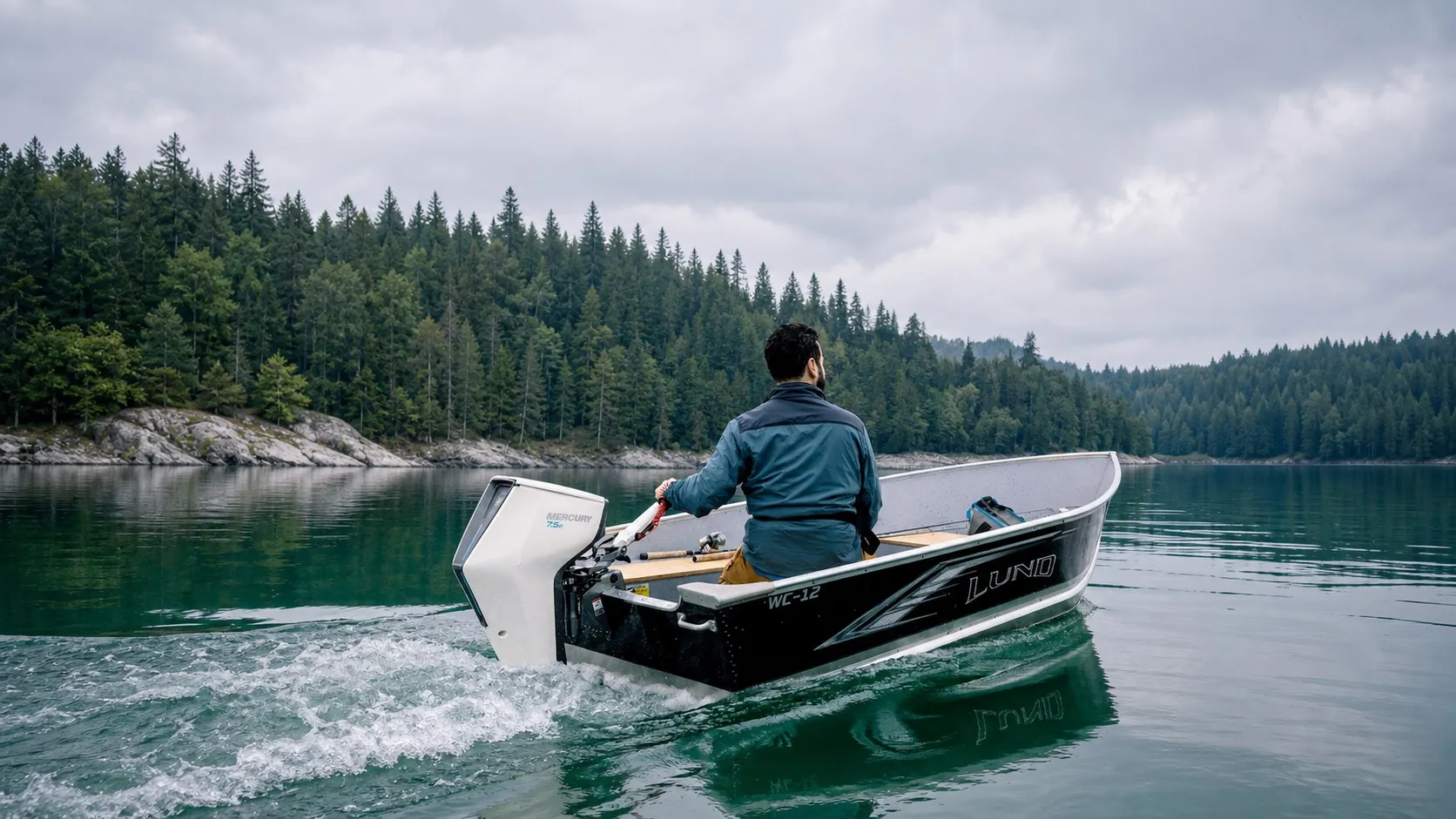
Choosing electric propulsion starts with the trip: distance, load, speed, battery capacity, and charging access. A few years ago, electric outboards were either tiny trolling motors or trade-show prototypes. Now Mercury's Avator line is real, it's here, and we're getting...
Quick answer: Electric repower works extremely well for the right boat doing the right job: trolling kickers, tenders, sailboat auxiliaries, and short quiet trips near the dock. For covering real distance on a big lake, gas still wins. We sell both, so we have no reason to oversell either one.
Choosing electric propulsion starts with the trip: distance, load, speed, battery capacity, and charging access.
A few years ago, electric outboards were either tiny trolling motors or trade-show prototypes. Now Mercury's Avator line is real, it's here, and we're getting asked about it at the counter most weeks.
So here's the whole picture. Where electric genuinely belongs on Rice Lake and the Kawarthas, where it doesn't, and how to figure out which side of the line your boat sits on.
Why Electric Is Suddenly a Real Conversation
Three things changed.
The motors got serious. Mercury put real engineering and a full dealer network behind Avator. This isn't a gadget anymore. It's a propulsion line with warranty, parts, and service behind it.
The silence is real. Mercury measured the Avator 35e at 63% quieter at full throttle than a 6 HP four-stroke outboard. On a calm morning you hear the loons, not the motor. No fumes at the transom, no pull-cord theatrics on a cold May morning, no oil changes.
The rules are moving. Some smaller Ontario lakes already restrict gas motors, and residents on lakes like Clark Lake near Huntsville have applied to Ottawa for outright gas motorboat bans. That trend is not going backward. Rice Lake isn't there, but plenty of second-boat and small-lake situations already are.
The Avator Lineup in Plain Terms
Mercury rates Avator motors by power output in kilowatts, not by gas horsepower. That trips people up, so here's what each model is actually for:
| Model |
Power at prop |
Battery setup |
Built for |
| Avator 7.5e |
750 W |
1 kWh pack, slides in under the cowl, swaps in seconds |
Dinghies, tenders, canoes, trolling kicker, sailboat auxiliary |
| Avator 20e |
2.2 kW |
External 2,300 Wh packs |
Small aluminum fishing boats, inflatables |
| Avator 35e |
3.7 kW |
External 2,300 Wh packs, stackable |
Small fishing boats, light tenders |
| Avator 75e |
7.5 kW |
Power Center hub, up to four 5,400 Wh packs |
Small pontoons, larger tenders |
| Avator 110e |
11 kW |
Power Center hub, up to four 5,400 Wh packs |
Pontoons and day boats on quiet water |
Two things worth knowing before you fall in love with a spec sheet:
- Electric torque arrives instantly. An Avator pulls off the line harder than its size suggests. Where it gives that back is sustained top speed and all-day range.
- Range scales with batteries, and batteries are where the money is. The motor head is often not the expensive part of the system.
Every Avator at HBW is build-to-order through Mercury Canada. We don't stock them on the floor, because the right battery count depends entirely on your boat and how you actually use it.
Where Electric Is the Right Call
Five situations where we'd recommend an Avator without hesitation:
- Silent fishing kicker. Gas main motor to get between spots, electric for slow, silent, fume-free trolling. This is the single best Avator use case on Rice Lake.
- Sailboat auxiliary. Getting in and out of the slip is exactly the short, low-demand job the 7.5e was built for.
- Tenders and car-toppers. A 9 to 12 foot boat doing short bay trips makes a gas portable redundant. No fuel can in the trunk, no carb to gum up over winter.
- Restricted or quiet lakes. If your other water has a gas restriction or a noise bylaw, electric isn't the alternative. It's the answer.
- Dock-to-dock putting around. Predictable short trips with an overnight charge waiting at the dock. The use case practically charges itself.
Where Gas Is Still the Right Call
Honesty requires the other list too. Stick with gas if:
- You cover real distance. All-day runs across a lake the size of Rice Lake need fuel you can pour, not electrons you have to wait for.
- Your boat is big or heavy. Above roughly 18 to 20 feet, battery weight and limited top-end power make the math stop working.
- You fish hard all day. Moving between bays at half throttle for eight hours is a gas motor's day. No current Avator does that comfortably.
- You expect it to feel like 40 horsepower. It won't. Instant torque is real, but it does not turn a pontoon into a ski boat.
The disappointed electric stories you read in forums almost all share one origin: someone asked a small electric motor to do a big gas motor's day. The motor did what it was designed to do. Just not what the owner wanted.
Electric vs Gas at a Glance
| Question |
Mercury Avator electric |
Mercury gas FourStroke |
| Noise and fumes |
Very quiet, with no exhaust fumes at the transom |
More sound and exhaust, even on a modern quiet four-stroke |
| Best day |
Predictable short trips, trolling, tenders and quiet-water use |
Longer runs, heavier boats and days without charging access |
| Energy stop |
Recharge from shore power or swap a compatible battery |
Refuel in minutes where gasoline is available |
| Routine engine service |
No engine oil, spark plugs or fuel system |
Scheduled oil, filter, spark-plug, fuel-system and cooling-system work |
| Biggest planning item |
Battery count, charging time and real-world range |
Fuel capacity, storage quality and service schedule |
| Practical limit |
Sustained speed, heavy loads and distance use battery quickly |
More noise, more routine maintenance and fuel to store |
Neither column is the universal winner. The right answer follows the boat, the trip and the charging available where the boat lives.
The Honest Limitations
Range shrinks in the real world. Wind, chop, load, and throttle all eat battery. Cold water early in the season takes a bite too, because lithium chemistry doesn't love the cold even though the motor itself does. In Mercury's own published 7.5e test on a light 13-foot boat, one 1 kWh battery gave about 60 minutes at full throttle, or most of a day at slow trolling speed. Read both halves of that sentence before you buy. Our Avator range on Rice Lake guide goes deeper.
Charging takes planning. The 7.5e's battery refills overnight from a standard dock outlet, faster with the optional quick charger. The big 5,400 Wh packs on the 75e and 110e are a different story and benefit from proper electrical service. If you have hydro at the dock, you're fine. If you don't, think hard. Details in our cottage charging guide.
The batteries are proprietary. Avator packs are engineered exclusively for the system (the larger ones in partnership with Mastervolt). You can't substitute cheaper third-party packs. That buys you integration and warranty backing, and it costs you flexibility. Familiar trade-off if you've ever owned marine electronics.
It's a premium product. An electric setup costs meaningfully more up front than the equivalent gas portable, and "it pays for itself in fuel" math takes years to catch up on a small motor. Buy electric for the silence, the simplicity, and the zero-maintenance mornings. Not for the payback spreadsheet.
Four Questions Before You Decide
Ask yourself these before calling anyone, including us:
- How big and heavy is the boat? Under 14 feet and light, electric is in play as the main motor. Bigger than that, think kicker or auxiliary instead.
- What does a typical day look like? A half-day of slow trolling is a completely different mission than a full day of open-water running. One battery does the first. Nothing electric does the second comfortably yet.
- Can you charge where the boat lives? Overnight dock outlet: yes. Remote anchorage with no shore power: your range anxiety is legitimate.
- What's the real motivation? Silence and clean operation point to electric. Maximum performance per dollar points to gas. A restricted lake makes the decision for you.
What we see at HBW
The Avator conversation at our counter is almost never "should I replace my 115 with electric." It's the second motor. The kicker for the walleye guys. The tender at the island cottage. The sailboat up at the club.
That's the honest state of electric boating in cottage country in 2026: it's not replacing the main gas motor on Rice Lake yet, and anyone who tells you otherwise is selling something. It is quietly winning the small-motor jobs, one dock at a time.
We're bringing Avator into the lineup now, with Mercury Canada pricing still being finalized. We will not invent a placeholder number. Use our Avator page for current availability and the configuration path.
Common mistakes
- Buying on the spec sheet's best number. Full-throttle range and trolling range differ by a factor of ten or more. Plan around how you actually run.
- Skipping the charging question. Figure out where the boat sleeps and what power is there before you order batteries.
- Under-buying batteries to save money. A one-pack setup that strands you in the wind gets sold at a loss next spring. Spec the real day, not the ideal one.
- Expecting gas-motor feel. Test one first. The instant torque is fun. The top end is not the point.
Sources
Compare Electric and Gas Options
Avator info: mercuryrepower.ca/electric/mercury-avator
Gas repower quotes: Build your quote
Address: 5369 Harris Boat Works Rd, Gores Landing, ON