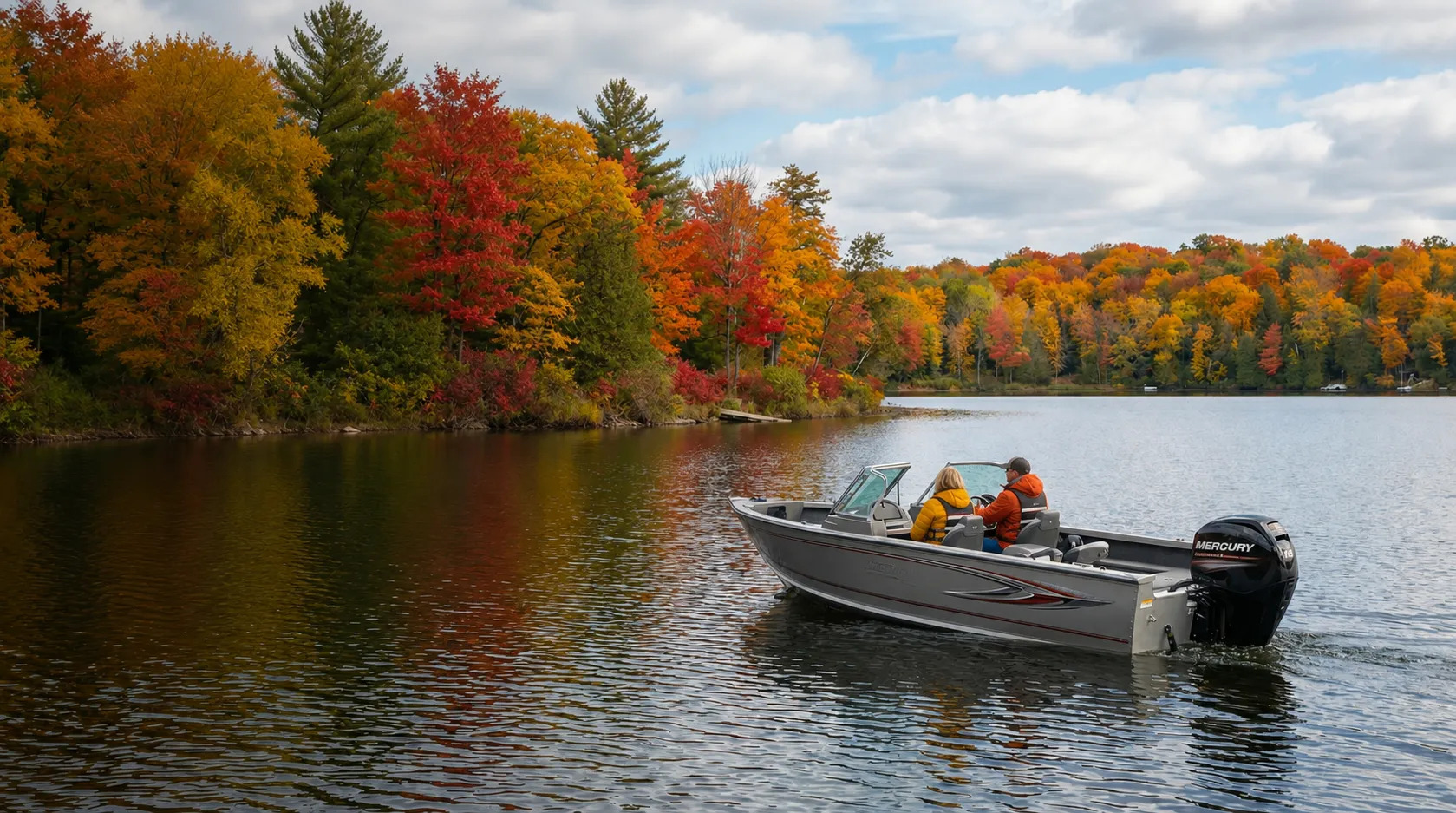
Ontario's boating season is shorter than people realize. Strip out the ice, the spring cold front, the fall layup, and you're left with maybe 22 good weekends if the weather cooperates. Making them count means doing the prep work outside that window, when nobody else is...
Quick answer: Ontario boating season runs roughly mid-April (ice-out) through late October (winterization). The three phases that matter are spring commissioning (March-April), peak summer operations (May-September), and fall layup (October-November). Most expensive surprises happen in the gaps when boaters skip steps or push past the season. This post is the HBW seasonal hub, what to do, when to do it, and what to skip the DIY on.
Ontario's boating season is shorter than people realize. Strip out the ice, the spring cold front, the fall layup, and you're left with maybe 22 good weekends if the weather cooperates. Making them count means doing the prep work outside that window, when nobody else is thinking about boats.
This post is the HBW seasonal hub. Three phases of the year, what HBW handles, what you can DIY, and what calls to make so you don't lose lake time to preventable problems.
Quick recommendation
If you want one rule that solves most seasonal headaches: complete hbw.wiki/service, then drop off anytime, including after hours. You can request fall winterization and spring commissioning in the same form.
Spring (March to Early May): Commissioning
Spring is the high-stakes phase. The first run of the year reveals every shortcut taken in fall, plus winter damage from condensation, rodents, and freeze events.
What HBW commissioning covers:
- Pull the cover, inspect for winter damage
- Battery reconnect and load test (a healthy battery may remain aboard only if fully charged, disconnected, secured, and permitted by the approved storage plan)
- Fuel system inspection, fresh fuel, ethanol treatment
- Lower unit oil change and seal inspection
- Cooling system check, impeller inspection (replace at the 3-year mark or sooner)
- Tilt-and-trim function and fluid
- Spark plug inspection, replacement if due
- Compression check on motors over 5 years old
- Steering and throttle linkage inspection
- Safety equipment check (Transport Canada compliance)
- Water test if conditions allow
We covered the full spring run-up in our Spring Outboard Commissioning Checklist and our more detailed Mercury Outboard Spring Run-Up Checklist for Ontario.
What can fail at first start (and what it costs):
- Dead battery. $200-$400 replaced. Free if it just needs a charge.
- Stuck thermostat or weak impeller. $40 in parts, but a missed impeller can cook a powerhead at $4,500+. The DIY version is one of the riskiest, the gearcase has to come off, and the failure mode is silent.
- Fuel water contamination. Ethanol absorbs moisture over winter. Untreated fuel can clog injectors and corrode lines. Treatment is cheap, ignoring it isn't.
- Storage damage from the wrong procedure. Stale fuel, water-contaminated gear lubricant, corrosion, a weak battery, or the wrong drainage position can turn into spring diagnosis and repair.
When to call HBW: if the motor's older than 5 years and hasn't seen a shop spring commissioning, that first start of the season is the call to make. Same if you bought the boat used and don't know the prior owner's winterization quality.
Summer (May to September): Peak Operations
Once the motor's running, summer is mostly about running it right, not about heavy maintenance. The most common shop visits in peak season are preventable, but they happen anyway.
The peak-season top 5 (what we see most):
- Impeller failures, especially June and July. Sand and weeds get pulled into intakes. We see the bulk of impeller jobs in summer for this reason. If you boat in shallow weedy water, inspect the intake screens before every launch.
- Steering and trim issues from saltwater corrosion. Not common on Rice Lake itself, but customers who haul to Lake Ontario for salmon or to the Trent-Severn brackish-influenced sections see it. Fresh-water flushing after every haul is the cheap fix.
- Battery failures mid-season. Heat plus deep discharge cycles kills batteries. Carry jumper cables and a portable jump pack.
- Prop damage from groundings. Rocks, sandbars, deadheads. Carry a spare prop if you fish unfamiliar water.
- Alarm codes and Smart Craft warnings. Most are advisory, some aren't. Our Mercury alarm codes guide covers the ones that matter.
Mid-summer service interval reminder: Mercury's 100-hour service is the big mid-life check (oil and filter, lower unit oil, plugs if due, full inspection). For most recreational Ontario boaters, this lands around year 2-3. Catch it before season-end if you can, it's cheaper than a 100-hour-plus-winterization stacked job in October.
Fall (October to Mid-November): Layup
Fall is where the season ends well or starts the next one badly. Skip winterization and you're betting on a mild winter, condensation cooperation, and your hose-out skills. We see the math on this every spring.
What HBW winterization covers:
- The fuel-treatment and internal-protection supplies specified for the exact engine
- Lower unit oil drain and refill (water in the oil means the seal is gone, the fall check is when we catch it)
- Cooling system flush and drain
- Block drain on inboard or sterndrive applications
- Battery prep: a healthy battery may remain aboard only if fully charged, disconnected, secured, and permitted by the approved storage plan. The model/serial manual and approved storage plan control.
- Cover or shrinkwrap (HBW offers outdoor storage with professional shrink wrap, outdoor uncovered storage, and shrink-wrap-only service. We do not offer indoor or heated boat storage.)
- Note any spring service that should be queued
Full cost breakdown for Ontario: Boat Winterization Cost Ontario 2026. DIY guide if you're handling it yourself: DIY Mercury Outboard Winterization Guide.
The cracked-block math: Skipping winterization and running into a hard freeze can crack the cylinder block or the lower unit. We see one or two of these every spring. Average repair runs $2,000-$5,000+, sometimes the motor doesn't come back at all. A $250-$400 full winterization is the cheapest insurance you'll buy all year.
Late-season safety considerations. Once water temps drop below 15°C, your survival window in the water shortens dramatically. Late October and early November runs need cold-water gear, a float plan, and someone who knows where you went. Detailed guide: Late-Season Boating Safety.
Year-Round: Transport Canada and Ontario Regulations
A few things don't follow the seasons.
Pleasure Craft Licence (PCL). As checked September 5, 2026, new, transferred and renewed Pleasure Craft Licences are valid for five years. Older licences have their own expiry date or transition deadline; check your licence with Transport Canada. The current fee is $24.41 for a new, transferred, renewed or duplicate licence, while updates and cancellations are free. Fees may change each April 1. Full details: Pleasure Craft Licence Update for Repower Ontario.
Capacity plate compliance. Ontario follows Transport Canada's federal capacity-plate rules. Overpowering (motor HP exceeding the plate maximum) creates capacity plate, insurance, liability, and potential warranty problems.
Boating safety education. Ontario requires the Pleasure Craft Operator Card (PCOC) for anyone operating a powered boat. The card doesn't expire. If you're new to boating or buying for a kid, get the PCOC online before the boat arrives.
Fishing regulations (if you fish from the boat). Ontario fishing regulations vary by Fisheries Management Zone (FMZ). Rice Lake is FMZ 17. Walleye slots, bass season dates, and licence requirements change. Source: Ontario.ca fishing regulations. HBW does not sell fishing licences, get them at ontario.ca.
Common Seasonal Mistakes
- Skipping winterization to save $300. The cracked-block math always wins this argument. Winterize.
- DIY impeller jobs without the right tools. The gearcase has to come off, the housing has to be inspected, the wear plate matters. Most DIY impellers we see come back as full lower-unit rebuilds. $40 part, $4,500 risk.
- Leaving the battery connected over winter. A healthy battery may remain aboard only if fully charged, disconnected, secured, and permitted by the approved storage plan. The model/serial manual and approved storage plan control.
- Running on last year's fuel after a long winter. Ethanol absorbs moisture. Drain, treat, or replace.
- Pushing the season too far in November. Cold-water survival is short. A motor stall on a 45-degree morning is a different problem than a stall on a July afternoon.
- Waiting until launch day to mention additional repairs. List any extra concerns in the service request so they can be added to the repair order before the standard spring check begins.
How to Time Your Service Calls
The cleanest seasonal flow we see at HBW:
- Fall: Complete hbw.wiki/service, then drop the boat off anytime, including after hours, for the approved winterization and storage plan.
- Winter: Follow the approved storage plan. The physical marina is closed December 1 through April 1.
- Spring: Complete the standard commissioning check and list any additional concerns on the service request.
- Boating season: Use the boat and follow the maintenance schedule for the exact engine and serial number.
Ready for the Next Season?
The work that makes the season feel easy happens between seasons. Booked once, planned out, locked in.
Book service (commissioning, winterization, mid-season): hbw.wiki/service
Repower quote builder: mercuryrepower.ca/quote/motor-selection
Trade-in estimate: mercuryrepower.ca/trade-in-value
Call us: 905-342-2153
Address: 5369 Harris Boat Works Rd, Gores Landing, ON