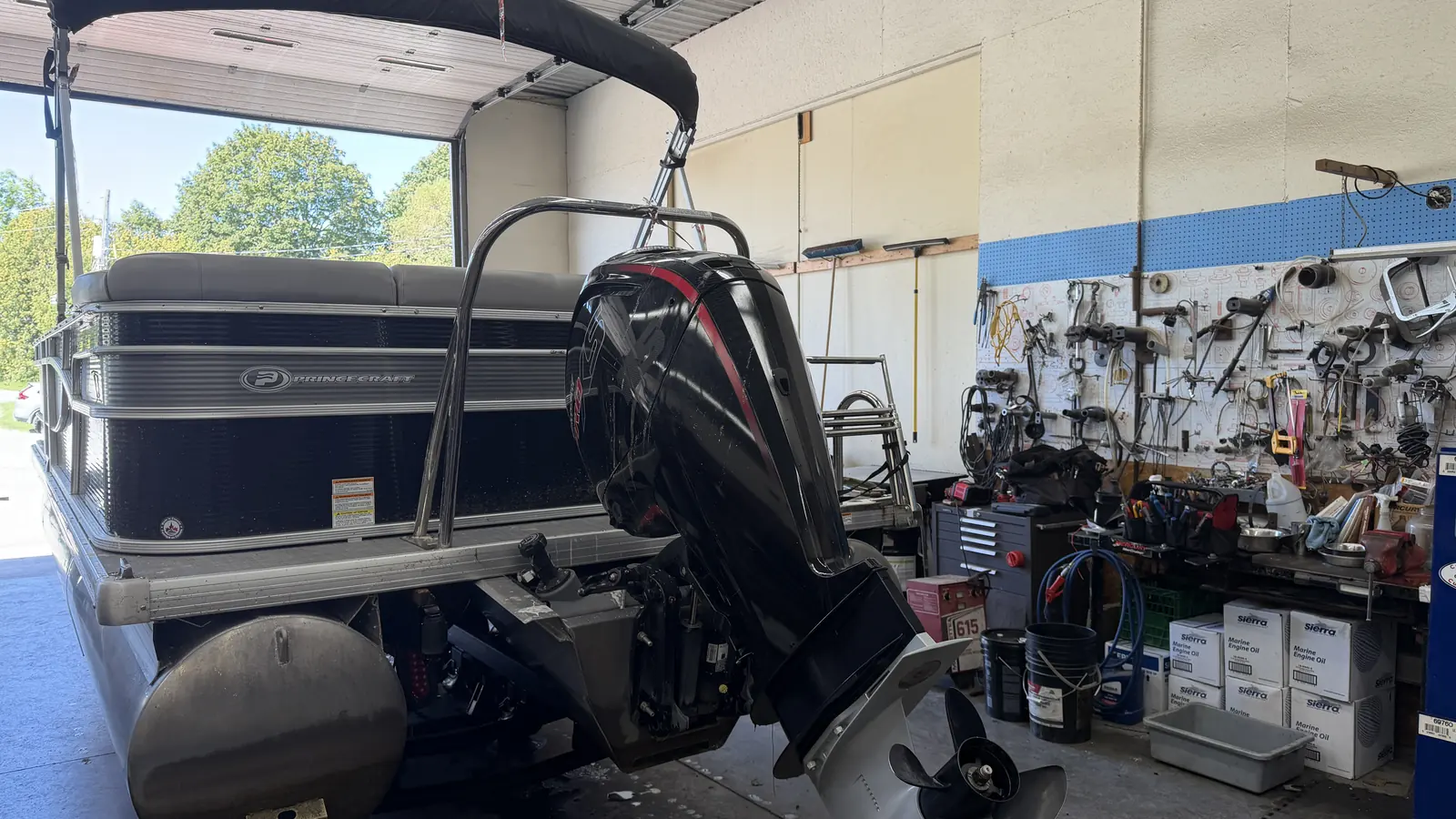
Pontoons are different from runabouts. They're heavy, draggy hulls that need torque and lift more than top-speed headline numbers. The mistake most pontoon buyers make is sizing the motor for the lightest day instead of the busiest. This post walks through what we actually...
Quick answer: The best Mercury outboard for a pontoon depends on tube count, length, hull rating, and real passenger load. A 90 HP FourStroke can suit many 20-foot two-tube pontoons; a properly rated 22-foot pontoon may need a 115 HP Command Thrust or 150 HP FourStroke. Tritoon recommendations depend on the capacity plate and watersports load. Boost can improve acceleration on an eligible motor, but it does not add horsepower. Use the pricing reference for current bare-motor pricing and the quote builder for boat-specific rigging and installation.
Pontoons are different from runabouts. They're heavy, draggy hulls that need torque and lift more than top-speed headline numbers. The mistake most pontoon buyers make is sizing the motor for the lightest day instead of the busiest. This post walks through what we actually rig on Rice Lake every spring, and where Command Thrust and Boost earn their price.
What size Mercury outboard do I need for my pontoon?
Pontoon sizing depends on three things: length, tube count, and how many passengers you actually carry. Forget the chart on the boat brochure. What matters is real-world load. A pontoon is not a runabout. It needs gearcase as much as it needs horsepower, which is why we almost never separate the two when talking pontoons.
Here is a planning grid for the first sizing conversation. The capacity plate and the actual boat always control the final recommendation.
| Pontoon length |
Tubes |
Typical passengers |
Mercury range to discuss |
| 18 ft |
2 |
4 adults |
60 to 75 HP FourStroke |
| 20 ft |
2 |
5 adults |
90 HP FourStroke; evaluate Command Thrust |
| 22 ft |
2 |
6 adults |
115 HP Command Thrust or 150 HP FourStroke |
| 22 ft |
3 (tritoon) |
6 to 8 adults |
150 HP or a properly rated Pro XS option |
| 24 ft |
2 |
6 to 8 adults |
150 HP FourStroke, subject to hull rating |
| 24 ft |
3 (tritoon) |
8+ adults |
Pro XS range matched to the capacity plate and load |
| 26 ft |
3 |
10+ adults |
Higher-horsepower Pro XS range where the hull permits |
Prices here are planning figures as of October 2026. For live Mercury motor pricing, see the Mercury pricing reference.
Single-tube pontoons are happy with mid-range FourStroke power. Tritoons benefit from Pro XS and Boost because their lift-to-cruise dynamics are different. More wetted surface, more drag at low speed, but a third tube that can actually use bigger horsepower.
How do boat length and tube count change the answer?
Length matters, but tube count may matter even more. A two-tube 20 footer and a 22 foot tritoon are both pontoons, but they do not ask for power the same way. The tritoon can turn more horsepower into a better-running boat because the centre log acts like a shallow V. It lets the boat lift cleanly and corner like a bigger vessel. A traditional two-tube pontoon hits diminishing returns earlier.
If you own a classic two-tube pontoon used for sunset cruises and casual fishing, there is rarely a reason to chase 200 HP. If you own a 22 to 24 foot tritoon that carries a full crew and pulls on weekends, the bigger number finally makes sense.
Load changes everything. A 20 foot pontoon with two adults and a cooler is not the same boat as that same pontoon with six people, a tube, and a full lunch. Pontoons expose underpowering quickly because they ask the engine to push a lot of hull before the boat ever starts to run cleanly. Size the motor around the busiest day of the summer, not the lightest.
Why does Command Thrust matter on a pontoon?
Command Thrust is the most common upgrade we sell on pontoon repowers. The bigger gearcase and 15-inch propeller give a pontoon meaningfully better hole shot and stronger reverse, both things pontoon owners actually feel.
The difference shows up when you load the boat. A standard 115 HP gearcase on a 22 foot pontoon with five adults aboard takes longer to come up on cruise and labours through the climb. A Command Thrust 115 plants the prop and gets the boat up in noticeably less time. In reverse, the bigger gearcase lets you back away from a dock with authority instead of slipping the prop.
The upcharge over the standard motor at the same horsepower varies with the current build sheet, so price the CT option in the configurator at mercuryrepower.ca. Command Thrust is our usual pick on loaded pontoons in the 90 to 115 HP class where Mercury offers a CT model. Larger 22-foot-plus tritoons running 150 HP or more usually use the standard gearcase. Check the exact model, load and pontoon. On many pontoons, the right horsepower with the wrong gearcase still does a worse job than the right Command Thrust package. That's why we almost never separate horsepower from gearcase when talking pontoons.
For when Command Thrust is not worth it on lighter boats, see the pontoon eligibility tables in our Command Thrust complete guide.
When is Pro XS with Boost the right pick for a pontoon?
Pro XS becomes the right call on three pontoon scenarios.
First, tritoons used for tubing or skiing. The third tube changes how the boat carries load and comes onto plane. A correctly sized Pro XS can provide the torque and response the hull needs. On an eligible motor, Boost activates automatically during full-throttle mid-range acceleration; there is no separate Boost button and no added horsepower.
Second, properly rated larger pontoons. These boats carry significant people and gear, so the base motor, hull rating, propeller, and setup come first. Boost may sharpen acceleration on an eligible motor, but it cannot create the horsepower margin an underpowered pontoon needs.
Third, owners who simply want a faster boat. A Pro XS V8 250 on a tritoon will run mid-40s mph and accelerate harder than most fibreglass family boats. It is not the budget pick but it is the right pick for that customer. Our Boost upgrade analysis covers the math on whether it earns its premium.
How much does a pontoon repower cost at Harris Boat Works?
Use the Mercury pricing reference for current bare-motor pricing. An installed quote can include motor, rigging, controls and cables, propeller selection, fuel system inspection, old motor removal, and a water test on Rice Lake before pickup. Pickup only at Gores Landing, no shipping, no delivery.
Some pontoons need additional rigging. Examples we see often:
- Mechanical controls being replaced with digital: add $800 to $1,500
- New fuel tank if the existing one is steel and corroded: add $600 to $1,400
- Steering upgrade for higher HP (hydraulic): add $1,200 to $2,000
- New gauges or chart-plotter integration: add $500 to $2,500
The complete price depends on the exact motor, controls, steering, propeller, transom and fuel-system condition, and how much existing rigging can be reused. Financing is OAC, with current rates updated periodically. Build a quote at mercuryrepower.ca for confirmed current terms and a line-item total for your pontoon.
What about the Mercury Avator on a pontoon?
The Avator 7.5e is a small electric outboard with 0.75 kW of prop-shaft output. It is intended for compatible small boats, tenders and quiet low-speed use, not as the main motor on a family pontoon. A pontoon setup needs a boat-specific review of displacement, load, speed, route and battery reserve.
Mercury rates Avator by prop-shaft output, not by a direct gasoline horsepower figure. The technical specification for the 7.5e is 0.75 kW at the propeller.
If you are building a pontoon repower and you want quiet trolling for walleye or bass, consider pairing a gasoline main motor with a small electric kicker. We rig that combination on Rice Lake fishing pontoons regularly.
What we see at HBW
Three patterns from rigging pontoons every spring on Rice Lake:
The 115 HP Command Thrust on a 22-foot two-tube pontoon is our most common pontoon repower. It fits the boat, fits the family, fits the budget. If you are not sure where to start, that's a defensible default.
The single biggest mistake we see is owners stretching too hard on a two-tube pontoon. A 200 HP Pro XS on a basic two-tube pontoon will not transform it. The hull design caps performance regardless of horsepower. If you want significantly faster, the question is "should I go tritoon?" not "can I add 50 HP?"
On a correctly matched pontoon, Command Thrust can materially improve loaded hole shot, low-speed control, and reverse authority. On a light hull that prioritizes top speed, it can add drag and cost without solving a real problem. Match it to the boat instead of relying on a customer-regret claim.
Ready to repower your pontoon?
Build a quote at mercuryrepower.ca and we'll match you with the right motor for your pontoon. We are the repower side of Harris Boat Works, a family marina in Gores Landing serving boaters since 1947. The same techs who write your quote are the ones who rig and water-test the motor on Rice Lake.
Phone: 905-342-2153
Address: 5369 Harris Boat Works Rd, Gores Landing, ON
Service: hbwservice.ca