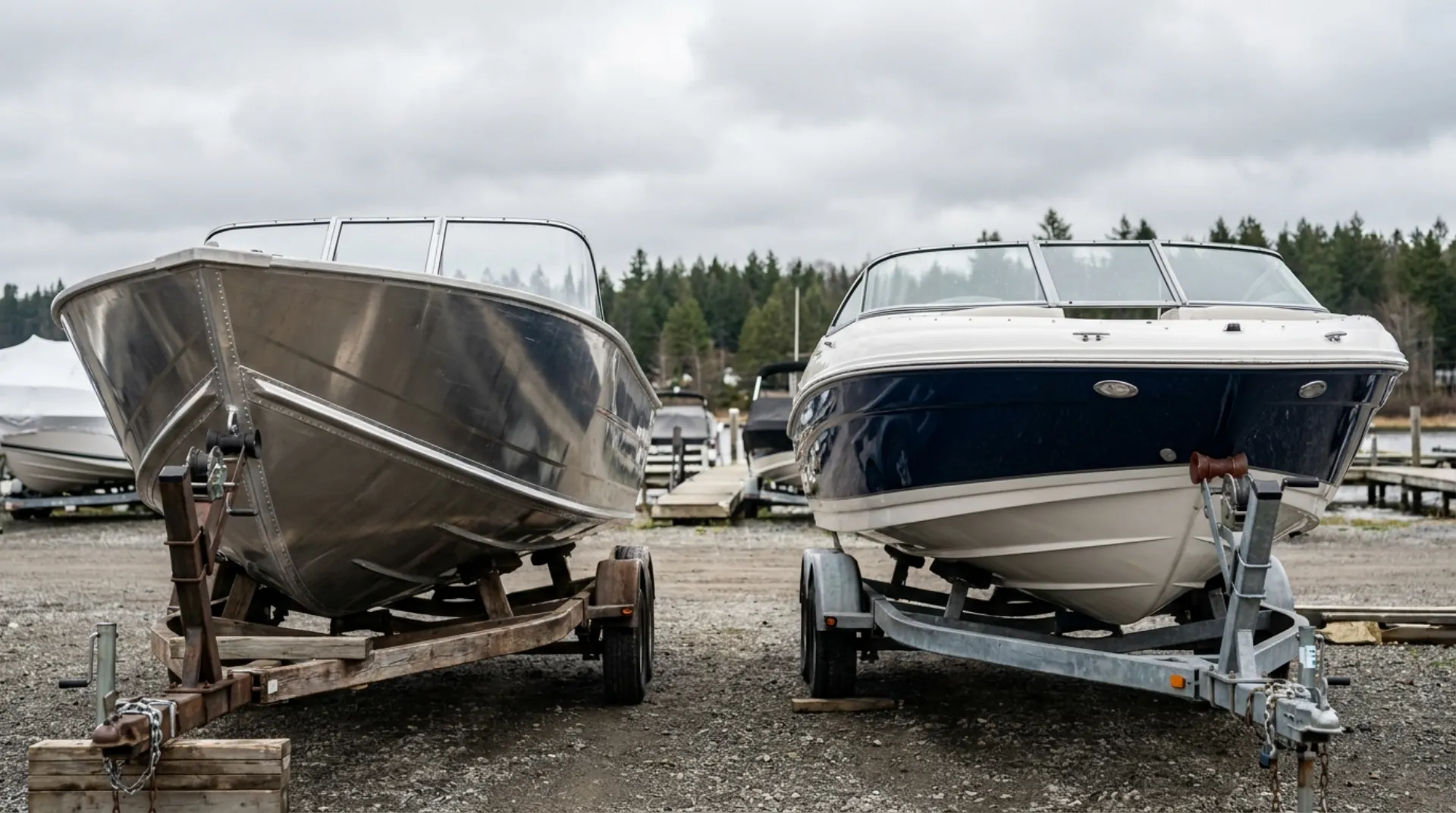
Quick answer Aluminum hulls are lighter, cheaper to buy, more forgiving on the trailer and at boat ramps, and easier to repair when something goes wrong. Fiberglass hulls ride smoother, look better at the dock, hold their value through cosmetic care, and feel more substantial...
Quick answer
Aluminum hulls are lighter, cheaper to buy, more forgiving on the trailer and at boat ramps, and easier to repair when something goes wrong. Fiberglass hulls ride smoother, look better at the dock, hold their value through cosmetic care, and feel more substantial on rough water. For a typical Ontario boater on Rice Lake, the Kawarthas, or smaller inland lakes, aluminum is usually the smarter buy. For an Ontario boater spending most of their time on Lake Ontario, Lake Simcoe, or running 20+ miles in a session, fiberglass starts to make sense. We sell both at Harris Boat Works, and the right answer depends less on price and more on where you launch from and how often you trailer.
What you are actually choosing between
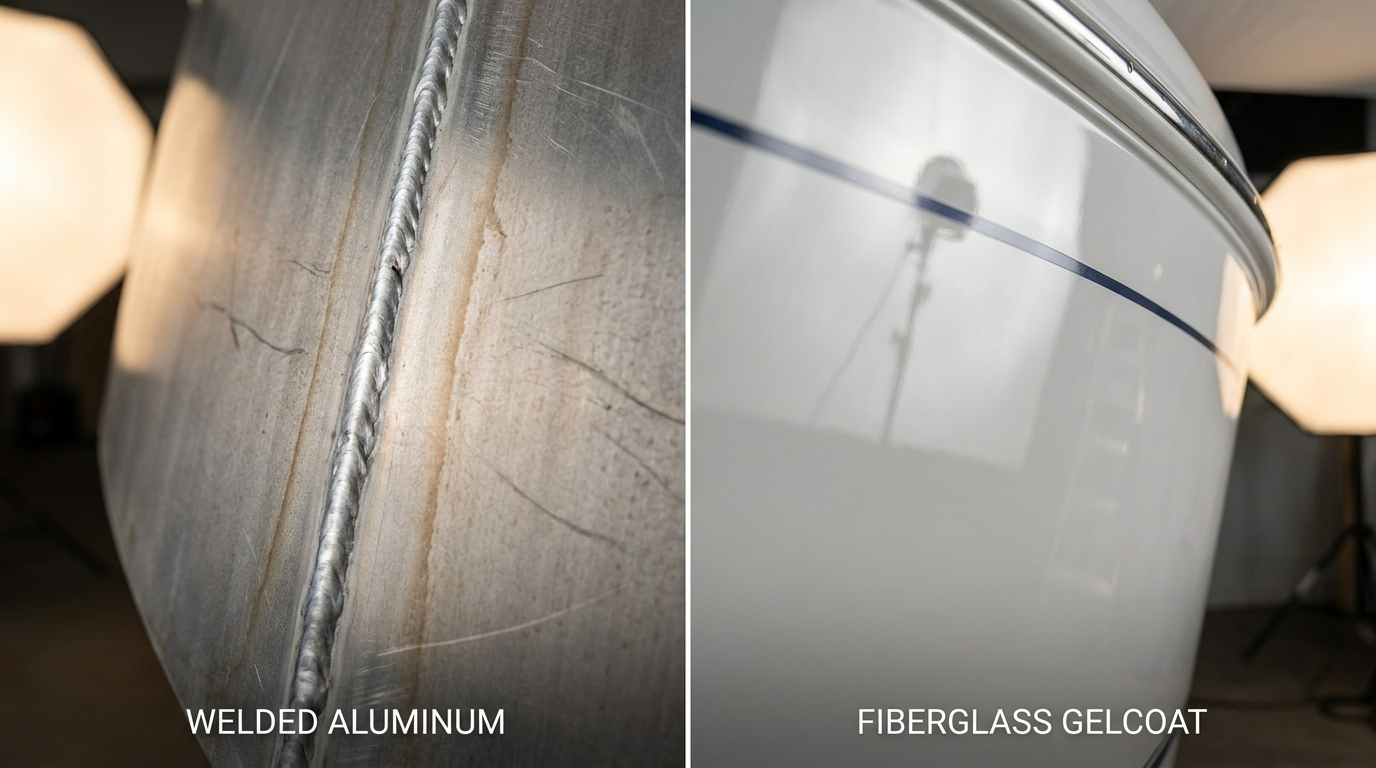
Aluminum hulls are formed sheet metal, either riveted or welded, with internal stringers for rigidity. Modern aluminum hulls are tig-welded marine-grade alloy. They flex slightly under load, which is part of how they absorb wake impacts without cracking.
Fiberglass hulls are laminated layers of glass fiber and resin laid over a mould. The result is a rigid, uniform hull with a smooth gelcoat finish on the outside. Fiberglass does not flex; it takes wake impacts as a solid structure. When it fails, it cracks rather than dents.
The difference between the systems shows up in weight, cost, ride, durability, and repair. Let's go through each.
Weight: aluminum wins
A typical 18-foot aluminum V-hull weighs 363-499 kg (800-1,100 lbs) dry. A comparable 18-foot fiberglass V-hull weighs 635-816 kg (1,400-1,800 lbs) dry. The 181-318 kg (400-700 lb) difference matters in three places:
- Trailering: a lighter boat means a smaller tow vehicle works fine. Half-ton trucks tow most aluminum boats; fiberglass often pushes you toward a three-quarter-ton.
- Launch ramp handling: lighter boats float off the trailer earlier, load easier, and are more forgiving when the ramp is shallow or weed-fouled.
- Fuel economy on plane: less weight means less horsepower needed to plane, which means less fuel burn over a season.
For Ontario boaters who trailer regularly between lakes, this is a real ongoing advantage.
Cost: aluminum wins on purchase, often ties on lifetime
A new 18-foot aluminum fishing boat from Legend Boats with a Mercury 90, and a comparable 18-foot fiberglass V-hull, have to be compared from current written quotes. Package contents, year, and options change the total.
For live Mercury motor pricing, see the Mercury pricing reference.
However: over 10 years, the gap narrows. Fiberglass hulls hold their resale value better if the gelcoat is maintained. Aluminum hulls depreciate more on purchase but bottom out faster (a well-kept 10-year-old aluminum boat sells for 50-60% of new; the same fiberglass boat might sell for 60-70%). The actual dollar gap over a 10-year ownership window is typically less than the purchase-price gap suggests.
The repair cost equation also matters. An aluminum dent or small puncture can usually be fixed by a competent welder for $200-$800. A fiberglass crack or gelcoat repair runs $500-$2,500 depending on size and visibility. Major fiberglass repairs (delamination, transom rot) can total a boat.
Ride: fiberglass wins
This is the honest one. A fiberglass V-hull glides through chop in a way aluminum cannot match. The rigid structure transmits less impact noise, the smoother hull shape cuts cleaner through waves, and the heavier mass dampens motion. On Lake Ontario or Lake Simcoe at 25 mph in 2-foot chop, the difference is striking.
Aluminum hulls bounce more, rattle more (the rivets are part of the design but also part of the sound), and feel less substantial at speed. Some modern welded aluminum boats with foam-injected hulls have closed much of the gap, but they have not eliminated it.
For Rice Lake at typical conditions, the difference is minor. Most of the season you would not notice. For consistent rougher-water use, fiberglass is meaningfully more comfortable.
Durability: a tie, but for different reasons
Aluminum durability is about dent tolerance. An aluminum boat that hits a rock, gets pinned against a dock, or bumps a trailer roller takes cosmetic damage but rarely structural failure. The hull keeps doing its job. Dents can be hammered out or left as character marks. Rivets occasionally need replacing but the boat does not become unusable.
Fiberglass durability is about long-term structural integrity if you avoid impact. A well-maintained fiberglass boat with intact gelcoat can run 30-40 years and still be tight. A neglected fiberglass boat with stress cracks, water intrusion through the gelcoat, or a soft transom can be unfixable. The repair-or-replace cliff is steeper on fiberglass than on aluminum.
For Ontario conditions (cold winters, ice damage potential during storage, rocky launches, occasional trailer mishaps), aluminum tends to age more gracefully. We see 1980s aluminum boats at our marina that are still fishing-ready. We see 1980s fiberglass boats that look great in the photos and have $8,000 of hidden transom rot.
This is why a Used Boat Walkaround Guide puts so much weight on the transom-flex test and gelcoat inspection on fiberglass boats. The structural problems hide.
Resale: fiberglass usually wins
The marketplace is honest about this: a 10-year-old fiberglass bowrider in clean condition holds more dollars than a comparable aluminum boat. Buyers see the gelcoat finish as evidence of care; they see scratches on aluminum as evidence of use.
Whether that gap is "worth" the higher purchase price depends on your ownership timeline. If you keep boats 3-5 years and move on, fiberglass tends to recover more of your investment. If you keep boats 10+ years and don't care about resale, aluminum is the cheaper path through the ownership cycle.
The repair conversation
If you have ever talked to a fiberglass repair tech about a serious blister job, you know the conversation: it is expensive, it takes weeks, and the result is rarely indistinguishable from original.
Aluminum repair is more democratic. A good local welder can fix most aluminum hull issues in a few hours. We see Ontario boaters keep aluminum boats running for 30-40 years through accumulated small repairs that would have totalled a fiberglass equivalent.
For DIY-minded owners, this matters a lot. For owners who want a clean boat that just works and don't want to think about hull material, fiberglass + a good maintenance routine + proper shrink-wrapped winter storage is the cleaner path.
What we recommend at Harris Boat Works
We sell Legend aluminum (V-hulls and pontoons) as our primary new-boat lineup. We also broker used fiberglass boats regularly through trade-ins and consignment. When customers come in undecided, we usually ask:
- Where do you launch most often? Rocky/concrete ramps favour aluminum.
- How often do you trailer? Frequent trailering favours aluminum.
- What water do you usually run? Smaller calmer lakes favour aluminum; bigger rougher water favours fiberglass.
- How long will you keep it? Long ownership favours aluminum; flip cycles favour fiberglass.
- What's your tow vehicle? A half-ton truck is happier with aluminum.
For a Rice Lake / Kawarthas primary boater, the aluminum recommendation wins most of the time. For someone who keeps the boat at a Lake Ontario marina or trailers to bigger water frequently, the fiberglass recommendation is honest more often.
About the author
Jay Harris helps run Harris Boat Works, a third-generation family marina in Gores Landing on Rice Lake, established in 1947. HBW is a Mercury Marine Premier Dealer and Legend Boats dealer serving Rice Lake, the Kawarthas, and Ontario boaters who want straight answers before spending real money. Read Jay's full bio.
Sources
- Legend Boats hull construction specifications (legendboats.com)
- Mercury Marine outboard installation guidelines (dealer technical reference, 2026)
- Transport Canada Construction Standards for Small Vessels (TP 1332)
- HBW internal trade-in and consignment data, 2018-2026